The expensive side of the conversation was the prompt
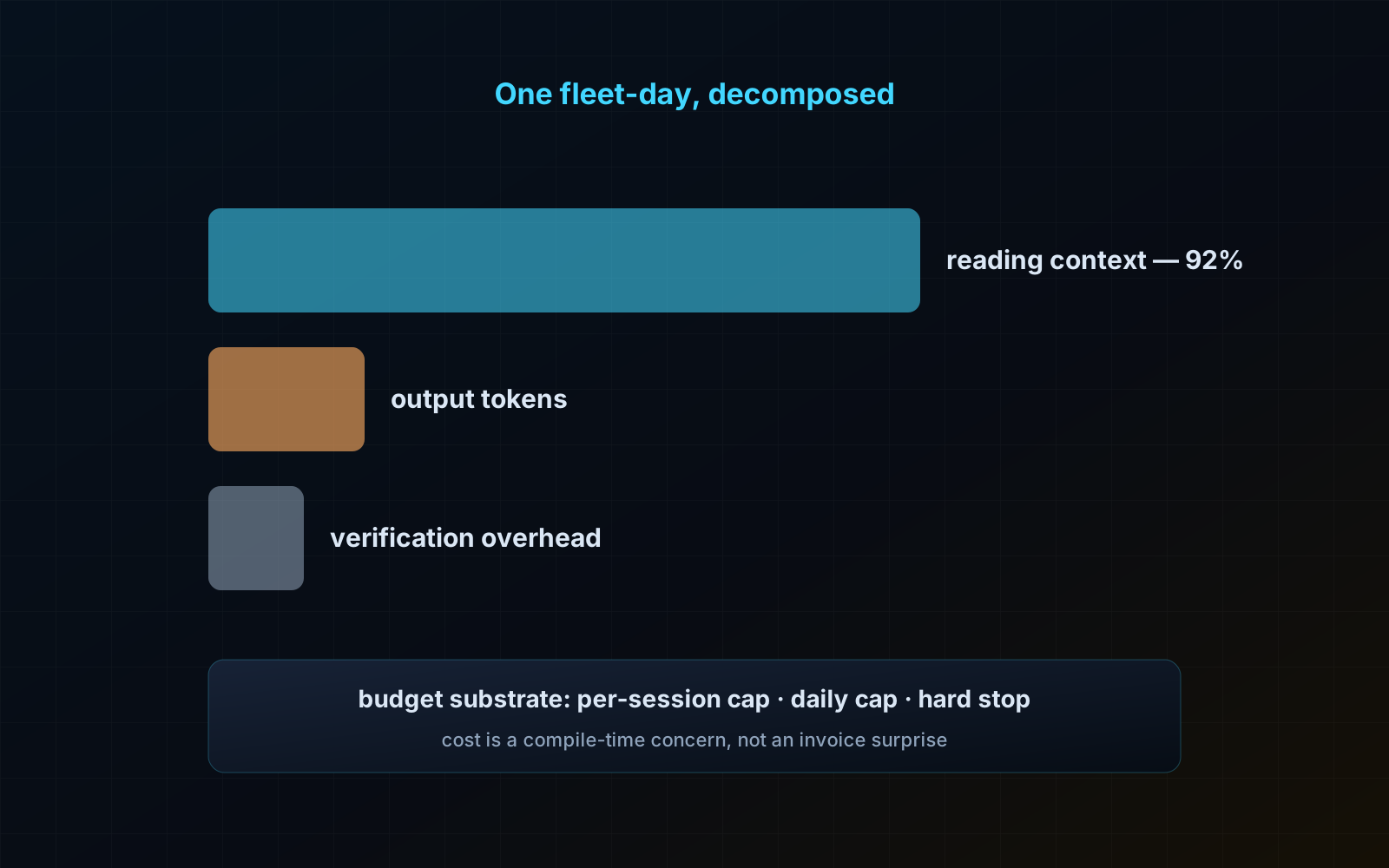
A one-day fleet snapshot produced a list-price estimate near $1,450. Approximately 92 percent was attributed to input and cache-read activity, not output tokens. The estimate is directional rather than a general benchmark: it covers one workload, one routing mix, and provider-reported telemetry whose cache pricing must be interpreted separately from ordinary input pricing.
| Cost source | Share (%) |
|---|---|
| Input and cache reads | 92 |
| Output generation | 8 |
The shape of the cost is the signal. When reading dominates, asking the model to write a shorter answer changes little. Reducing repeated context, returning summaries from subagents, and keeping irrelevant files out of the prompt become the primary cost controls. Many teams still argue about output verbosity while the prompt rereads yesterday's investigation.
A cheap-looking session can still raise the fleet bill
A frontier orchestrator can look efficient inside one session because it makes fewer calls or produces cleaner instructions. The same choice can raise total fleet cost if every delegated worker silently inherits that model. Per-session telemetry can improve while the aggregate bill gets worse. Both dashboards are telling the truth; they are answering different questions.
The remedy belongs on the spawn path. Every delegated task should declare its model class, expected responsibility, and hard budget. A high-cost model may own architecture or adjudication, while lower-cost models handle bounded extraction, checks, and mechanical edits. Inheritance is convenient, and it is how one premium decision becomes a premium fleet.
Context limits are spend limits
Long-running agent sessions repeatedly reread earlier tool output, old diffs, and stale investigation notes. Once those artifacts have been distilled into a plan, a receipt, or a short context file, keeping the raw material in every subsequent turn buys little and compounds cost.
A practical policy sets context checkpoints at phase boundaries. Raw research is replaced by a specification. Full test output is replaced by failing cases. Completed work is represented by a commit and an evidence receipt. This is not only prompt hygiene. It is a budget mechanism that removes future billable input.
Put the stop in front of dispatch
A production agent should have a maximum cost per task, a maximum cost per run, a model-eligibility rule, a context ceiling, and an explicit stop condition. Those limits should be checked before dispatch and again before retries. An alert after the limit has been crossed is accounting rather than control.
The first measurement to publish internally is the read-to-write ratio by task class. If context accounts for more than four-fifths of spend, optimize retrieval, delegation summaries, and session boundaries before negotiating output-token prices. If output dominates, model choice and response design deserve more attention.